
Another milestone has been reached in the SAFeCRAFT Project! We have now completed the Life Cycle Cost Assessment (LCCA) of the demonstrator bulk carrier vessel. The study, led by the University of Strathclyde, included capital expenditure (CAPEX), operational expenditure (OPEX), maintenance expenditure (MTEX), and end-of-life expenditure (ELEX).
The CAPEX covers costs related to system purchase and installation. OPEX is analysed based on fuel consumption, comparing traditional fossil fuels such as heavy fuel oil (HFO) and marine diesel oil (MDO) with alternative fuels like hydrogen (H₂), ammonia (NH₃), and Liquid Organic Hydrogen Carrier (LOHC). The maintenance costs for major onboard equipment are also considered to provide a comprehensive view of life cycle economics. Finally, the end-of-life costs address recycling strategies, evaluating their cost-effectiveness.
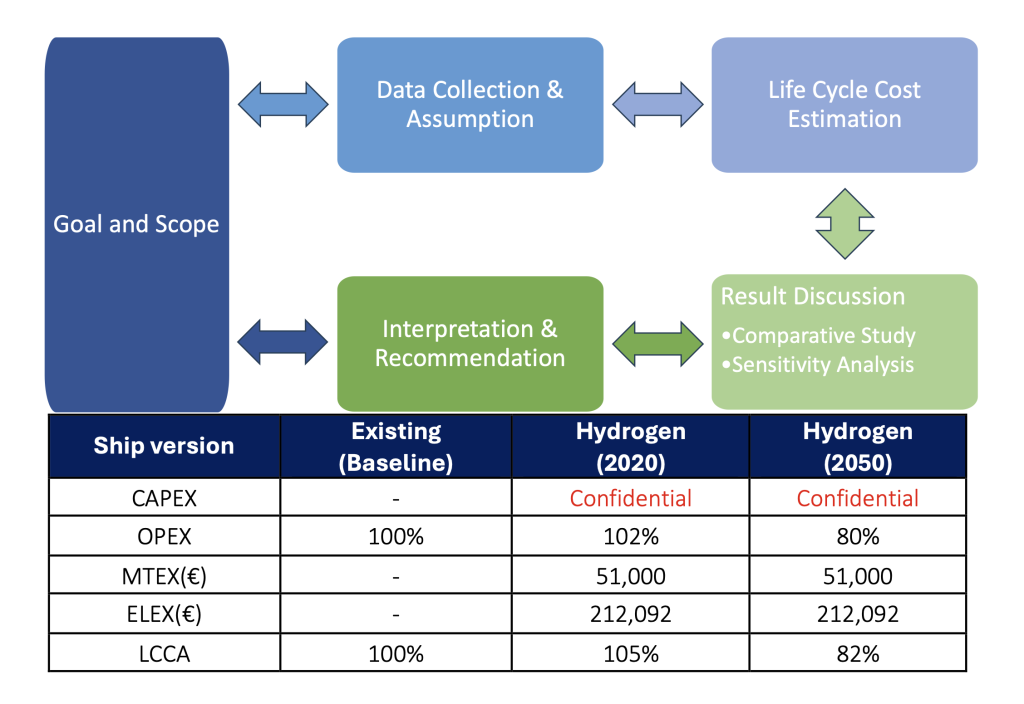
The life cycle cost assessment supports the strategic alignment of vessel design and operation with emerging policies and sustainability targets in the maritime sector. From the study, it was concluded that hydrogen demonstrates a more favourable economic outlook as a marine fuel, and recommendations are provided for shipowners, fuel suppliers, and those involved in research and development of alternative fuels for the maritime industry.


