
The SAFeCRAFT project successfully held its three-day FMEA (Failure Mode and Effects Analysis) Workshop in Chania, Greece, focusing on advancing safety strategies and system reliability in hydrogen-based maritime applications. The task, led by the University of Strathclyde, brought together partners to analyse critical safety issues, assess operational risks, and refine system designs for the project’s demonstrator and hydrogen processing systems.
Participants explored significant updates to the hydrogen processing system, including the removal of a compressor and the simplification of pressure reduction processes, aimed at improving operational efficiency and safety. Detailed discussions focused on the different operating modes of the SAFeCRAFT demonstrator, the safe purging of hydrogen pipelines, and the design of systems to ensure early hazard detection and effective emergency response in the event of overpressure or fire.
A major part of the workshop concentrated on pressure management and leak prevention strategies. Partners examined the role of pressure sensors, feed filters, aeration systems, and safety barriers in maintaining system integrity and preventing hazardous scenarios. The importance of redundancy, robust manual control options, and well-defined operational protocols was emphasised, particularly in addressing challenges such as overpressure events, blackout scenarios, and potential gas leaks. Proposed improvements included enhanced pressure relief systems, pressure recording post-operations for leak detection, and refined activation thresholds for safety devices.
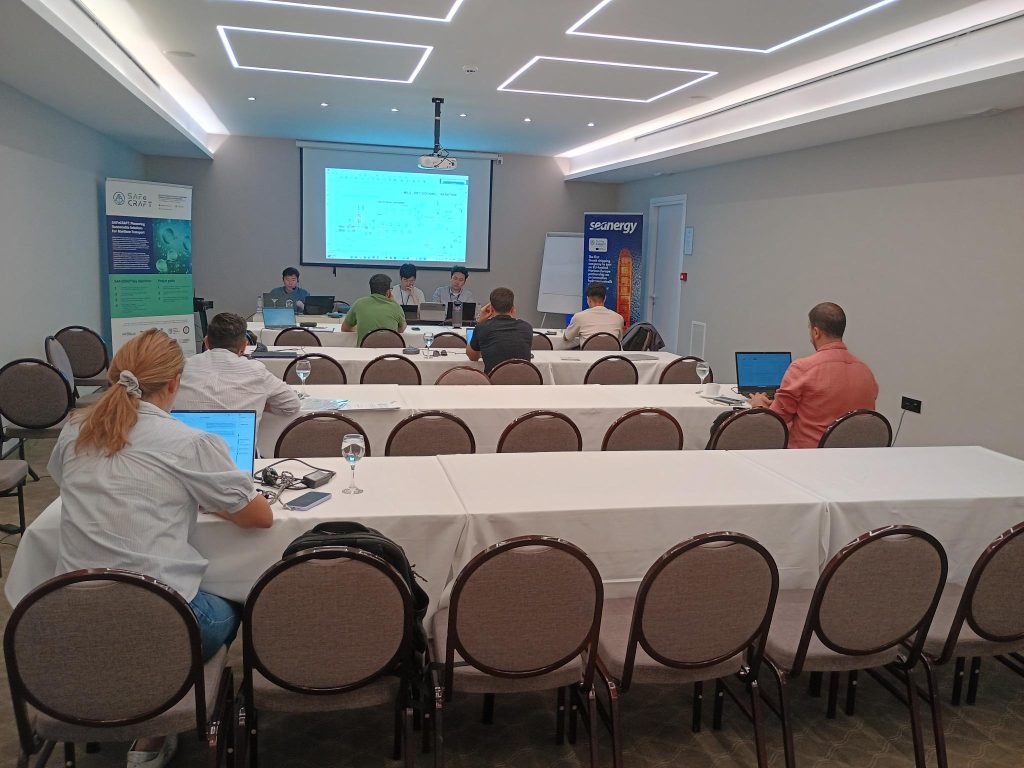
The workshop also addressed emergency operations linked to engine shutdowns and hydrazine handling, highlighting the need for reliable shut-off sequences, clear communication protocols, and advanced monitoring solutions. Innovative approaches such as thermal imaging and ultrasound detection were discussed as potential tools for improving hydrogen detection and mitigating risks. Further recommendations included introducing redundancy into venting systems, scheduling regular maintenance of high-risk components, and integrating additional automatic sensors to improve safety performance and regulatory compliance.
The collaborative discussions resulted in concrete proposals for updating the FMEA worksheet and strengthening the overall safety framework of the project. The insights gained will inform future design decisions and risk mitigation strategies, supporting SAFeCRAFT’s overarching mission to enable the safe, reliable, and sustainable integration of hydrogen technologies into maritime transport.
