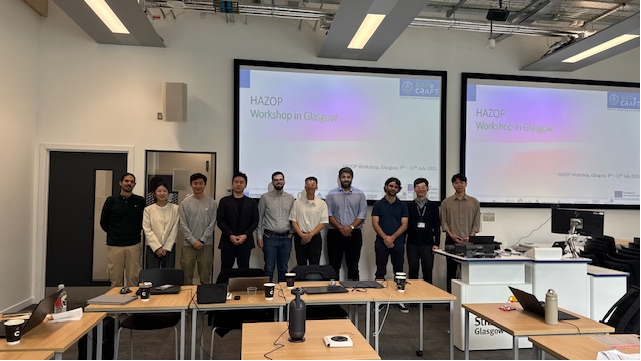
From 9th to 11th of July the University of Strathclyde hosted a hybrid Hazard and Operability (HAZOP) workshop in Glasgow, bringing together SAFeCRAFT partners to rigorously examine the safe implementation of compressed hydrogen systems for maritime use.
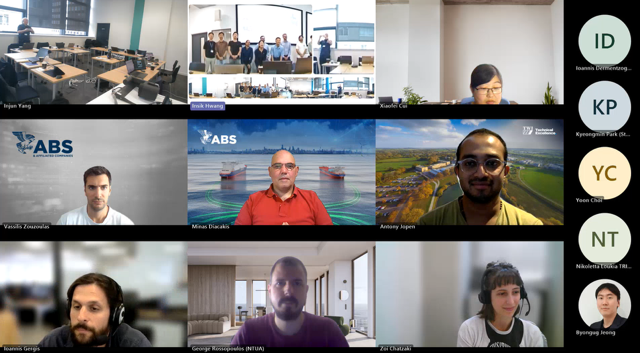
Over the three-day workshop, participants systematically analysed 12 operational modes to identify and assess potential safety risks related to compressed hydrogen. The sessions fostered close collaboration across the consortium and focused on evaluating key system components:
- Hydrogen storage systems
- Fuel supply unit
- Bunkering unit
- Vent mast
- Generator engine combustion section
This collaborative safety analysis provided a critical platform to challenge technical assumptions, uncover hidden hazards, and drive informed design improvements grounded in operational realism.
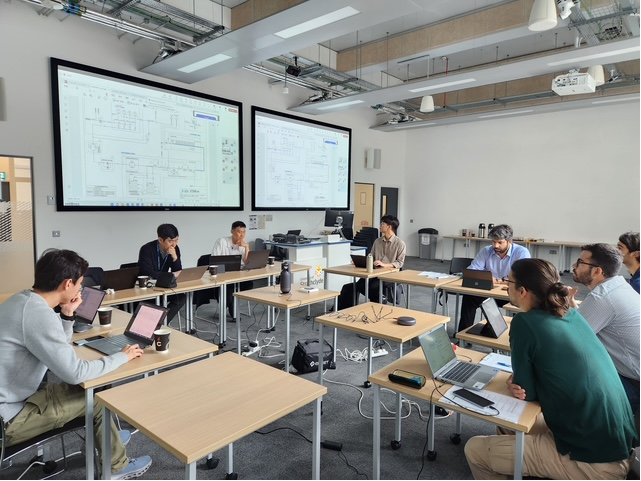
The outcomes of the workshop highlight SAFeCRAFT’s commitment to proactive safety engineering and continuous system optimisation. Key actions emerging from the discussions include:
- Refinement of bunkering operational modes to better reflect real-world procedures and improve the precision of safety assessments.
- Redesign of the vent mast pipeline network to reduce the risk of hydrogen dispersion and enhance emergency venting capabilities.
- Modification of the fuel supply unit design to address identified hazards and strengthen overall system resilience.
These agreed actions will guide the next stages of system development, supporting SAFeCRAFT’s goal of delivering safe, efficient, and robust hydrogen technologies for the maritime sector.
We sincerely thank the University of Strathclyde for their excellent organisation and warm hospitality in hosting this important workshop. Their support contributed significantly to the success of this key project milestone.